

Earth, explained.

  • What happens,
  • why it happens,
  • how we know,
  • why it matters,
  • what responses involve.

Climate, ecosystems,pollution, energy,water, food and materials.Global questions,close-to-home examples.

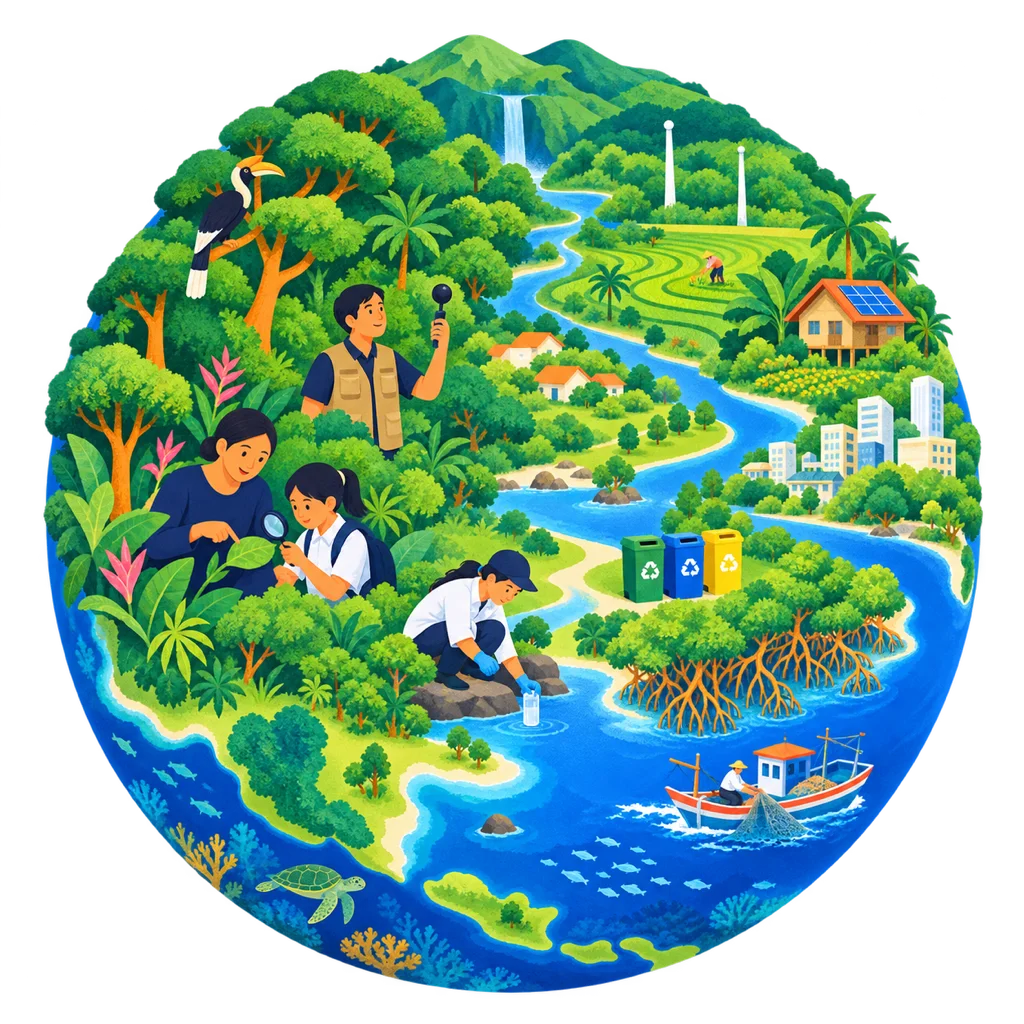
Illustrated globe: rainforest with a hornbill, mangroves and coral, rice terraces, a river town with solar panels and wind turbines, and people testing air and water and studying a leaf.

Seven systems, one planet.

Pick a system to see what it covers and the kind of questions we explore.

Climate

How heat, air and ocean work together, why the climate is changing, and how we know.

Close to home: Monsoon downpours and El Niño dry spells in Malaysia.

Questions we explore

  • Why does warmer air bring heavier downpours?
  • What is El Niño, and why does it dry out Southeast Asia?
  • How do scientists know temperatures from before thermometers?
Ecosystems

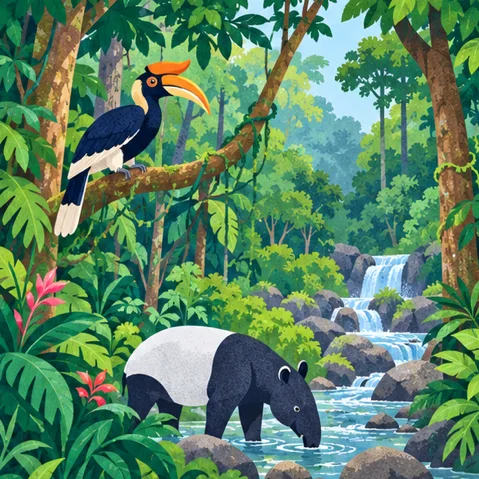
Forests, reefs, mangroves and peat swamps: how living systems hold together, and what happens when they are stressed.

Close to home: Rainforests of Peninsular Malaysia and Borneo, and coastal mangroves.

Questions we explore

  • Why are mangroves called living sea walls?
  • What makes a peat swamp forest so different?
  • How do you count animals you rarely see?

Pollution

What we release into air, water and soil, where it goes, and how it affects health.

Close to home: Haze seasons and plastic in urban rivers.

Questions we explore

  • Why does haze cross borders?
  • What happens to plastic after the bin?
  • How is air quality measured and reported?

Energy

Where electricity and fuel come from, what each source asks of the planet, and how the mix is changing.

Close to home: Rooftop solar and hydropower in Malaysia.

Questions we explore

  • How does a solar panel turn sunlight into electricity?
  • Why is storing electricity so hard?
  • What does the carbon intensity of electricity mean?

Water

The journey of water from cloud to river to tap, and what floods, droughts and pollution do along the way.

Close to home: Monsoon floods and the rivers that supply our taps.

Questions we explore

  • Where does tap water come from before the tap?
  • Why can a warmer world bring both floods and droughts?
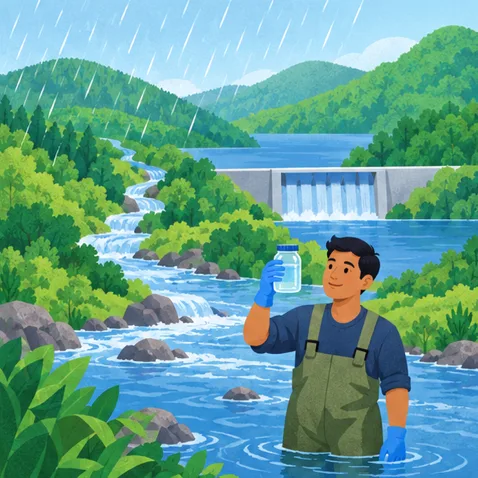
  • What does river water testing actually measure?

Food

How food is grown, caught and moved, and how farming and fishing shape land, sea and climate.

Close to home: Rice paddies, coastal fisheries and wet markets.

Questions we explore

  • Why do flooded rice fields release methane?
  • What is a food footprint, and how is it calculated?
  • What happens to a sea when it is overfished?

Materials

What things are made of, where those materials come from, and what happens when we are done with them.

Close to home: Recycling, paper, bamboo and moulded fibre.

Questions we explore

  • Paper, plastic or reusable: how do you compare them fairly?
  • What does biodegradable really promise?
  • Why is recycling aluminium worth the effort?

On the explainer desk

Coming up

Visual explainers, evidence-led stories and side-by-side comparisons, written by Maya.

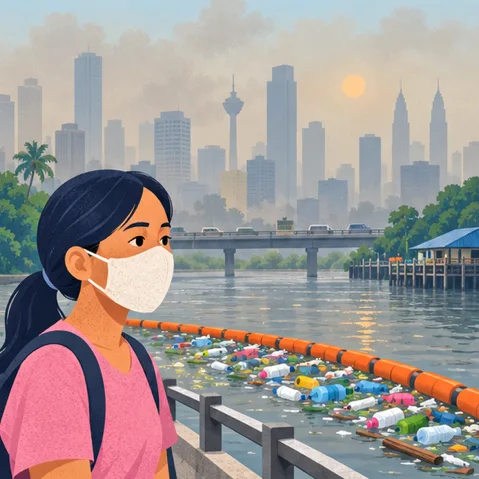
Illustration of a woman in a face mask beside a city river where a boom collects floating plastic, with hazy towers behind

Why haze crosses borders

Following smoke from drained peatland to city skies, and the satellites and sensors that track it on the way.

Evidence: established
Illustration of stilt houses in a coastal village as a monsoon rain cloud rolls in, with a weather balloon rising in the sun

El Niño and La Niña, explained

How a shift in Pacific Ocean temperatures can mean drier months in Borneo and heavier rain elsewhere.

Evidence: established
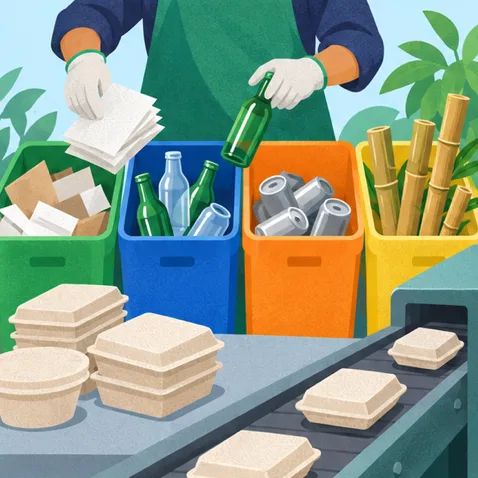
Illustration of a worker sorting paper, glass, cans and bamboo into recycling bins beside moulded fibre containers on a conveyor

Paper, plastic or reusable: comparing bags fairly

Why the answer depends on how often a bag is reused, and on what a life-cycle assessment chooses to count.

Evidence: uncertain
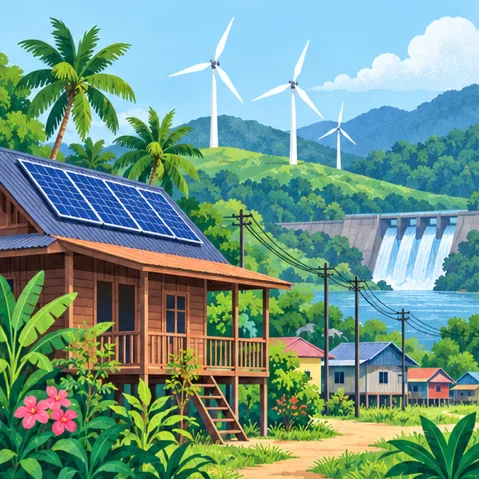
Illustration of a wooden house with rooftop solar panels, wind turbines on the hills and a hydropower dam

Solar panels that float

Panels on reservoirs can spare land and may cut evaporation. Their long-term effects on water life are still being studied.

Evidence: emerging
Illustration of a farmer planting rice seedlings in a flooded paddy beside a basket of vegetables and a fishing boat

Rice and methane: flooded fields vs wetting and drying

Why waterlogged paddies release methane, and how draining fields at the right moments can reduce it.

Evidence: established

Know what we know.

Not every finding is equally certain. Each claim on EcoEarth365 carries a label, so you can tell a settled finding from an estimate with a range, or an idea still being tested.
Evidence: established
Many independent lines of evidence agree.
Evidence: uncertain
Measured or modelled, with a real range of possible values.
Evidence: emerging
Promising ideas still being tested or debated.
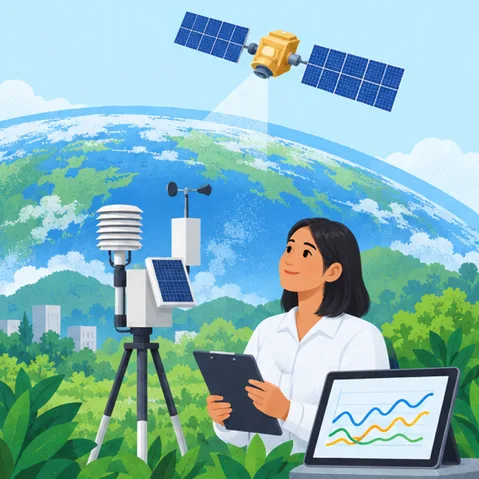
A satellite orbits above Earth while a researcher with a clipboard checks an air-quality monitoring station.
  • Evidence: established

    420+ ppm

    Yearly average carbon dioxide in the air at Mauna Loa, Hawaii, in 2024. Before industrialisation it was about 280 ppm.

    Source: NOAA Global Monitoring Laboratory

  • Evidence: uncertain

    2.5–4 °C

    How much Earth would eventually warm if carbon dioxide doubled. It is a range rather than one number, largely because clouds are hard to pin down.

    Source: IPCC Sixth Assessment Report, Working Group I (2021)

  • Evidence: established

    9%

    Share of the world's plastic waste that was recycled in 2019. Most was landfilled, burned or leaked into the environment.

    Source: OECD Global Plastics Outlook (2022)

  • Evidence: emerging

    Pilot scale

    Machines that pull carbon dioxide straight from the air already run, but only at small scale. Whether they can grow cheaply enough to matter is still open.

    Source: IEA, Direct Air Capture (2022)

Five questions,one explainer.

Every EcoEarth365 explainer follows the same path, so you always know where you are. Here is one worked through, using haze in Southeast Asia.

  1. 1What happens
  2. 2Why it happens
  3. 3How we know
  4. 4Why it matters
  5. 5What responses involve

Smoke you can see from space

Step 1 of 5 · What happens

In some dry seasons, smoke from land and peat fires, much of it in Sumatra and Kalimantan, drifts across borders. Skies over Malaysia and Singapore can stay hazy for weeks.

Evidence: establishedExample: haze in Southeast Asia

Dry peat burns like a slow fuse

Step 2 of 5 · Why it happens

Peat is waterlogged plant matter built up over thousands of years. Once drained, it dries out and can smoulder underground, where fires are hard to put out. El Niño years tend to be drier in the region, so fires spread more easily.

Evidence: establishedExample: haze in Southeast Asia

Satellites, sensors and samples

Step 3 of 5 · How we know

Satellites detect the heat of active fires and track smoke plumes. Ground stations measure fine particles called PM2.5. In Malaysia, the Department of Environment publishes Air Pollutant Index (API) readings for each area.

Evidence: establishedExample: haze in Southeast Asia

Lungs, schools and stored carbon

Step 4 of 5 · Why it matters

Fine particles reach deep into the lungs and are linked to breathing and heart problems. Haze can close schools and disrupt flights. Burning peat also releases carbon that was locked away for thousands of years.

Evidence: establishedExample: haze in Southeast Asia

From rewetting peat to regional rules

Step 5 of 5 · What responses involve

Responses range from rewetting drained peat and preventing fires to satellite early warnings and the ASEAN Agreement on Transboundary Haze Pollution, signed in Kuala Lumpur in 2002. Day to day, it means checking air quality and limiting time outdoors on bad days.

Evidence: establishedExample: haze in Southeast Asia

Answers to questions

Who is EcoEarth365 for?

Curious people without a science background, students, educators and professionals who want environmental topics explained clearly and accurately.

What do the evidence labels mean?

Established: many independent lines of evidence agree. Uncertain: measured or modelled, with a real range of possible values. Emerging: promising ideas still being tested or debated.

Why so many Malaysian and Southeast Asian examples?

The science is global, but it is easier to grasp close to home. Where it helps, we pair a global subject with an example from Malaysia or the wider region.

Do I need to change something after every episode?

No. Understanding is a valid outcome. Some explainers end with possible responses; many simply help you see how things work.

Is anything for sale here?

No. EcoEarth365 is published alongside a wider portfolio that works with materials and production. When a story touches that world we say so, but topics are chosen for what is worth understanding.

Where do the facts come from?

Peer-reviewed research, official agencies and international assessments such as the IPCC. We name the source next to each claim.

Learning is a valid outcome.

Not every explainer ends with a to-do list. Sometimes the point is simply to understand how the planet works.

Worked example: Why does haze cross borders?Explore